
Pattaya history: fishing communities, military leave and a tourism city
How Pattaya grew, why American military leave mattered, and why its history also includes local communities, investment and family tourism.
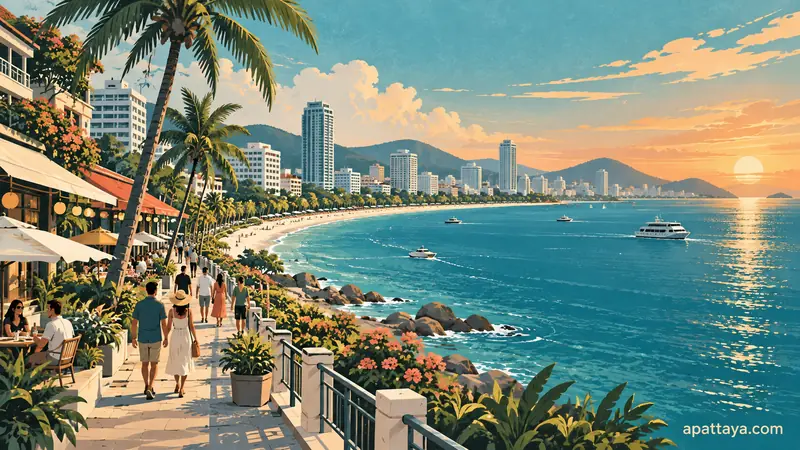
Before the international resort
Pattaya’s history is easier to understand as several overlapping stories: a coastal community, a place for visitors, a rapidly developing resort and a city where people live and work. The familiar fishing-village description is a starting point, not a complete account. It should not make earlier residents disappear from the story or imply that a single group of foreign visitors created the city overnight.
American visitors and the Vietnam War period
Thailand’s ONEP records a local account of American military visitors arriving on 29 June 1959. This is an attributed milestone, not a proven first-ever tourist visit. Chulalongkorn research places tourism before the main expansion and identifies American visitors during the Vietnam War. Military rest and recreation therefore belongs in the history, alongside the people and businesses serving a changing visitor economy.
More than one engine of growth
Burapha University’s historical research describes successive phases shaped by military demand, investment and tourism policy. Read this as a longer transformation rather than a simple village-to-bars slogan. Hotels, restaurants and entertainment can grow together, while the needs of residents develop on a different timetable. A present-day photograph of a busy street cannot show all those stages or establish how many establishments operated in a particular decade.
A reputation is not a map of everyone’s life
Nightlife is an important part of how visitors discuss Pattaya. It is not a reliable description of every neighbourhood, worker or holiday. A bar, a cabaret, a massage business and a family attraction are different activities. For planning purposes, choose your accommodation and outings by the exact area and the experience you want, rather than accepting either an entirely glamorous or an entirely disreputable image of the city.
Use the history to explore more thoughtfully
Compare the seafront, residential streets and older commercial areas rather than treating one nightlife street as a complete portrait. When someone shares a memory, distinguish personal recollection from an official record and keep its date. Historical photographs can help, provided their location and reuse rights are clear. A useful city history leaves room for local voices, changing livelihoods and visitors with very different interests. Keep historical material separate from current opening hours and transport advice: an old photograph can explain a place without promising what operates there today.